



UV Printing vs Laser Engraving vs Sublimation vs UV DTF
UV Printing vs Laser Engraving vs Sublimation vs UV DTF: Which Is Right for Your Corporate Gift?
A practical guide from a Singapore manufacturer. Stop guessing and start ordering with confidence.
✦ Key Takeaways
- UV printing delivers full colour, photo-quality results on hard surfaces. Best for vibrant logos and multi colour designs on tumblers, mugs, and notebooks.
- Laser engraving permanently etches designs into the surface with no ink and no fading. Ideal for metal and wood products where longevity matters.
- Sublimation bonds dye directly into the material under heat, producing seamless, all over colour on coated ceramics, fabric, and soft goods.
- UV DTF stickers are a newer transfer method that produces full-colour, waterproof decals applicable to almost any surface without specialist equipment. Ideal for curved, irregular, or difficult-to-print surfaces.
- The right method depends on three things: product material, design complexity, and how long the print needs to last.
- LIMTEH uses all three methods in-house with 6 machines and 100,000+ personalised units produced.
The most common question we get from corporate buyers in Singapore is: "Which printing method should I use for my gift?" The honest answer is: it depends on your product, your design, and how long you need the print to last. UV printing, laser engraving, sublimation, and UV DTF each do different things. Choosing the wrong one means gifts that fade, peel, or simply don't look as premium as you intended. Having produced over 100,000 personalised items across all four methods at LIMTEH, here's exactly what each technique does, what it's best for, and when to use it.
1 What Is UV Printing?
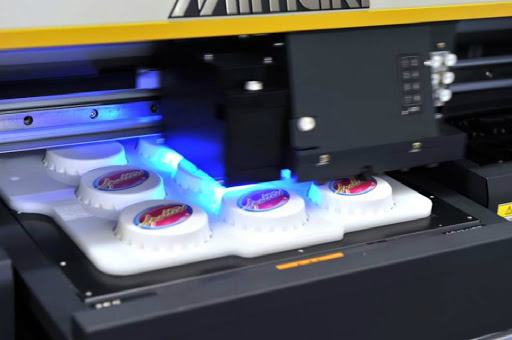 UV printing is a direct-to-surface digital printing method. UV ink is sprayed onto the product, then cured instantly by ultraviolet light, bonding it to the surface. The result is a scratch-resistant, full-colour print that can reproduce photos, gradients, and multi-colour logos with high precision.
At LIMTEH, we use UV printing as our primary method for hard-surface products. It's fast, versatile, and produces a clean, modern finish that looks especially good on stainless-steel tumblers, custom mugs, and notebooks with PU covers.
UV printing works on: Stainless steel, aluminium, hard plastic, PU leather, wood, acrylic, glass, ceramic (uncoated).
UV printing does not work on: Fabric, textiles, or soft goods. For those, see sublimation or DTG below.
Durability: UV prints are water-resistant and scratch-resistant under normal use. They hold up well on drinkware used daily, though abrasive cleaning (e.g., steel wool) will wear them over time. For gifts that need to last years through heavy use, consider laser engraving instead.
Cost: Moderate. Set-up cost is minimal compared to silkscreen (no screens required). Cost-per-unit decreases on larger runs, but UV printing is also viable for small orders, even quantities of 10–20 units.

2 What Is Laser Engraving?
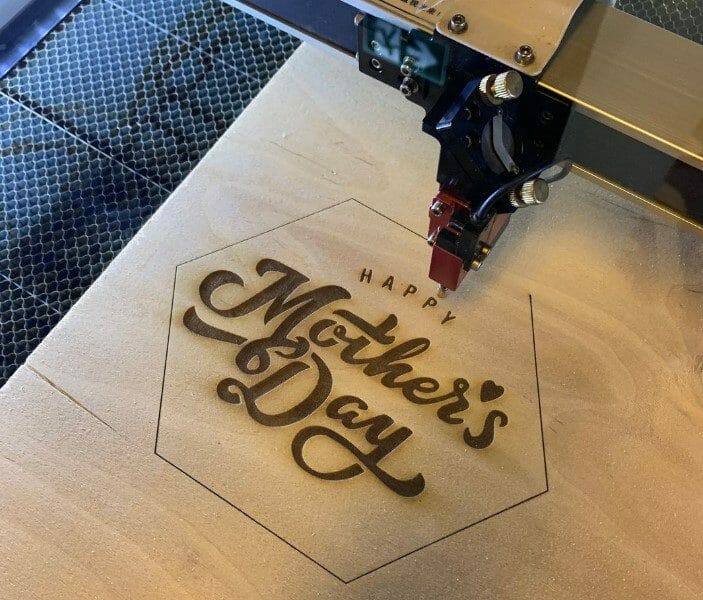 Laser engraving uses a focused laser beam to burn or vaporise the surface of a material, leaving a permanent mark. There is no ink involved. The design is physically etched into the product, so the result never fades, never peels, and cannot be scratched off.
This is the premium-feel technique. When a financial institution or law firm orders personalised gifts for senior clients, they almost always choose laser engraving. The engraved finish has a tactile quality you can feel that printed methods cannot replicate.
Laser engraving works on: Stainless steel, aluminium, wood, acrylic, leather, glass, bamboo.
Laser engraving does not work on: Fabric, soft plastics, or products requiring full-colour output. Engraving is monochromatic; the design contrast comes from the depth of the etch against the base material colour.
Durability: Permanent. The engraving is part of the material and cannot chip, peel, or fade under any normal conditions. Laser-engraved gifts are the most durable personalised items we produce.
Cost: Generally higher per unit than UV printing for complex designs, because engraving time is proportional to design detail. Simple logos and text are fast and cost-efficient. Intricate illustrations take longer. Always share your artwork early so we can provide an accurate quote.

3 What Is Sublimation?
 Sublimation is a heat-transfer process where dye converts from solid to gas under high temperature and pressure, penetrating directly into a specially coated substrate. The dye becomes part of the material rather than sitting on top of it. The result is a seamless, vibrant, photo-quality print with no surface texture.
This is the method behind the full-wrap printed mugs and all-over printed fabric items you see in gifting. Because the dye bonds at a molecular level, sublimation prints are exceptionally wash-resistant and won't crack or peel the way heat-transfer vinyl can.
Sublimation works on: Polyester fabric, polymer-coated ceramics (mugs, plates), coated metal panels, coated phone cases, mouse pads. The substrate must be white or light-coloured and must have a polymer coating. Sublimation does not work on cotton or uncoated surfaces.
Sublimation does not work on: Dark fabrics, uncoated ceramics, natural wood, stainless steel (without coating), cotton.
Durability: Excellent. Since the dye fuses with the substrate, sublimation prints are highly resistant to washing, UV exposure, and daily handling. They are significantly more durable than standard heat-transfer methods.
Cost: Cost-effective for mid-to-large quantities on coated products. Per-unit costs are low once set up, making sublimation efficient for runs of 50 units and above.

4 What Is UV DTF?

UV DTF (UV Direct to Film) is a transfer printing method where a full-colour design is printed onto a special film using UV-cured inks, then laminated with an adhesive layer. The resulting sticker-like transfer is peeled and pressed onto a product surface by hand, with no heat press required.
Think of it as a precision-cut, waterproof, full-colour decal that bonds permanently to almost any surface. It's one of the most versatile methods we use at LIMTEH precisely because it's not limited by the size or shape of our printing machines. A curved bottle, an irregular wooden surface, a metal pen — UV DTF handles them all.
UV DTF works on: Glass, metal, stainless steel, wood, acrylic, ceramic, hard plastic, PU leather. Essentially any smooth or semi-smooth hard surface, regardless of shape or curvature.
UV DTF does not work on: Fabric, textiles, highly textured or porous surfaces where the adhesive cannot bond cleanly.
Durability: UV DTF transfers are waterproof and scratch-resistant under normal handling. They hold up well on products used daily. That said, they are not permanent in the same way laser engraving is. Over years of heavy abrasion or dishwasher exposure, edges may lift. For longevity on high-use items, UV direct printing or laser engraving remains the stronger choice.
Cost: Low set-up cost with no minimum quantity requirements. UV DTF is particularly cost-effective for small personalised runs, even single units, making it ideal for name personalisation on individual gifts within a larger order.

5 Side-by-Side Comparison
| Feature | UV Printing | Laser Engraving | Sublimation | UV DTF |
|---|---|---|---|---|
| Colour output | Full colour, gradients, photos | Monochromatic (material contrast) | Full colour, vibrant, seamless | Full colour, high detail |
| Best surfaces | Hard: metal, plastic, PU, wood | Hard: metal, wood, acrylic, leather | Coated ceramics, polyester fabric | Almost any hard surface, curved or flat |
| Durability | High (scratch-resistant) | Permanent (cannot fade) | Very high (dye fused to material) | Good (waterproof; edges may lift over time) |
| Touch / feel | Slight texture on surface | Tactile — you feel the engraving | Smooth, no surface texture | Slight raised texture from transfer |
| Works on fabric? | No | No | Yes (polyester only) | No |
| Works on curved surfaces? | Limited | Limited | No | Yes |
| Minimum quantity | Low (from 1pcs) | Low (from 1pcs) | Medium (from 5pcs) | Very low (even single units) |
| Lead time at LIMTEH | 3–5 business days | 3–5 business days | 3–7 business days | 3–5 business days |
| Perceived prestige | Modern, vibrant | Premium, executive | Vibrant, gift-ready | Crisp, versatile |
6 Which Method Should You Choose?
The fastest way to decide: match the method to your product and your design. Here's how we advise our corporate clients:
Quick-Pick Guide
- Multi colour logo on a tumbler or mug → UV printing
- Premium engraved name or logo on metal or wood → Laser engraving
- Full-wrap design on a ceramic mug or mouse pad → Sublimation
- Full colour design on a curved or irregular surface → UV DTF
- Logo on fabric tote bags or drawstring bags → DTG or sublimation (polyester)
- Executive gift set with multiple products → Mix: laser engraving on the metal item, UV print or UV DTF on the notebook
If your design has gradients, full colour illustrations, or photographic elements, choose UV printing or UV DTF depending on your surface. If your design is a clean single colour logo and longevity is the priority, laser engraving is the answer. If you want seamless edge-to-edge coverage on a ceramic or fabric product, sublimation. And if your product has a curved or awkward surface that machines can't print directly onto, UV DTF is the practical choice.
Still unsure? Send us your artwork and the product you have in mind. We'll recommend the right method and provide a quote. Our team has produced over 100,000 personalised items across all four techniques and we'll tell you honestly which approach gives you the best result for your budget.
Browse our full range of personalised corporate gifts, all available with your choice of print method.
Not sure which method suits your gift?
Send us your artwork and quantity. We'll recommend the right technique and turn your order around in 3–5 business days.
Browse Corporate Gifts →Frequently Asked Questions
What is the difference between UV printing and laser engraving for corporate gifts in Singapore?
UV printing applies full colour ink onto a hard surface and cures it with ultraviolet light, producing vibrant, detailed results ideal for multi colour logos. Laser engraving physically etches the design into the material using a laser beam with no ink involved. It is permanent and preferred when a premium tactile finish matters more than colour.
Which print method is most durable for personalised gifts?
Laser engraving is the most durable. The design is part of the material and cannot peel, fade, or wash off. Sublimation is second, as the dye bonds molecularly with the substrate. UV printing is highly durable for everyday use but can wear on surfaces subjected to heavy abrasion over time.
Can I use sublimation printing on stainless-steel tumblers?
Not on standard stainless steel. Sublimation requires a polymer-coated surface. For stainless-steel tumblers, UV printing or laser engraving are the correct methods. UV printing gives full colour results; laser engraving gives a premium monochromatic finish with no risk of fading.
Which print method is best for a company logo on a corporate gift?
If your logo uses multiple colours, UV printing gives the most accurate reproduction on hard-surface gifts. If your logo is a single colour and the gift is metal or wood, laser engraving delivers a more premium result that lasts indefinitely. For coated ceramic mugs, sublimation allows full-wrap coverage.
What is UV DTF printing and how is it different from UV printing?
UV DTF (Direct to Film) prints a full-colour design onto a special film with UV-cured inks, creating a waterproof transfer sticker applied by hand. Unlike direct UV printing, which requires a flat surface and a UV flatbed printer, UV DTF works on curved, irregular, or small surfaces where direct machine printing isn't practical.
Does LIMTEH handle all four printing methods in-house?
Yes. LIMTEH operates 6 in house production machines in Singapore and handles UV printing, laser engraving, sublimation, UV DTF, DTG, and DTF, all under one roof. This means consistent quality, faster turnaround (3–5 business days), and no outsourcing risk on your corporate order.